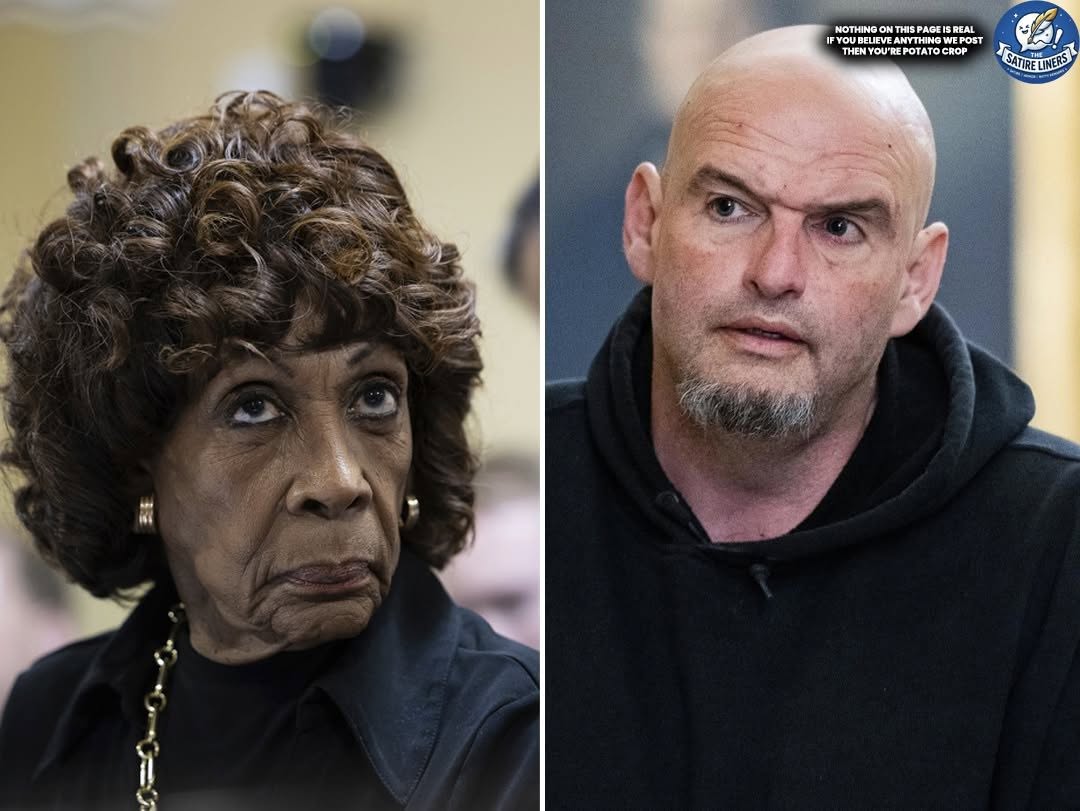
Washington has always been a city where political disagreements are expected, but occasionally a dispute emerges that cuts deeper than ordinary partisan arguments. The latest controversy surrounding Democratic Congressman John Fetterman and longtime Representative Maxine Waters has opened a much larger conversation about leadership, responsibility, public service, and the difficult question facing many political parties across America: When is it time for a longtime figure to step aside?
According to statements circulating online, Fetterman has criticized Waters and suggested that concerns about her ability to fully carry out her congressional responsibilities should no longer be ignored. The remarks have quickly attracted attention because Waters is not an ordinary political figure. For decades, she has been one of the most recognizable voices in Congress, known for her outspoken style, strong opinions, and willingness to confront political opponents directly.
The clash between two Democratic figures from different generations highlights a growing tension inside American politics. It is not simply about one person. It represents a broader debate about whether experience should always outweigh concerns about performance, whether loyalty within a party can prevent necessary conversations, and how elected officials should respond when questions arise about leadership capacity.
For supporters of Fetterman’s position, the issue is about accountability. They argue that elected officials have a responsibility to remain fully engaged because their decisions affect millions of Americans. For Waters’ defenders, however, criticism of a longtime public servant raises questions about respect, fairness, and whether political disagreements are sometimes being framed as personal attacks.
The controversy has become another chapter in America’s ongoing debate over the future of political leadership.

A Political Career Built on Defiance and Influence
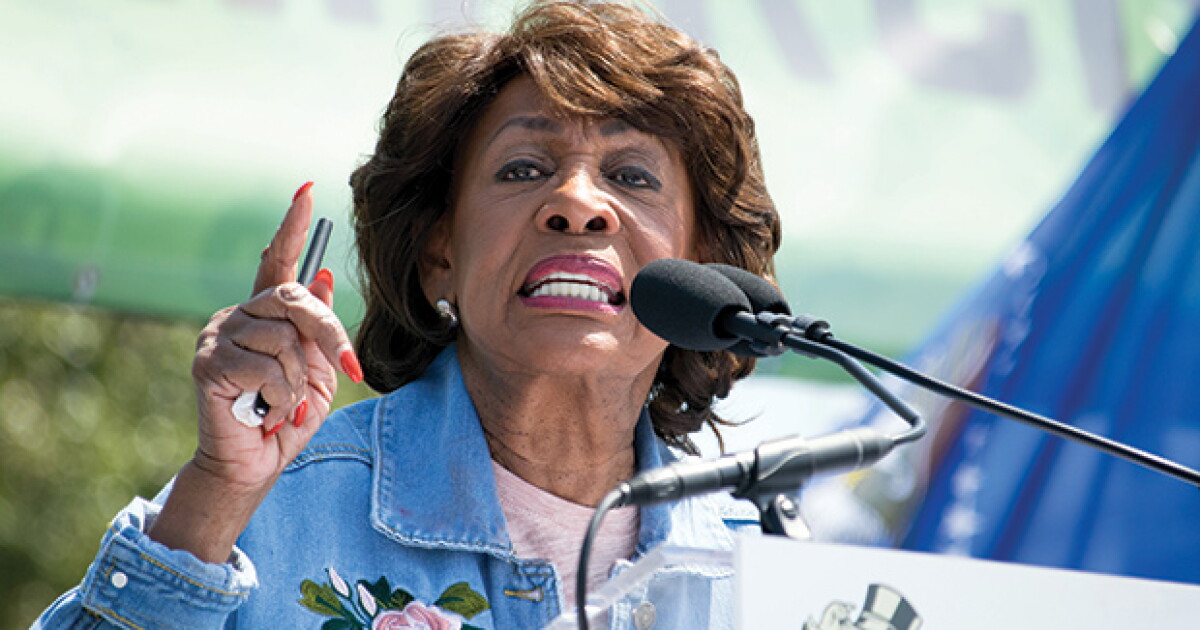
Maxine Waters has spent decades building one of the most recognizable political identities in Washington. First elected to Congress in 1991, she became known for her direct communication style and her willingness to challenge powerful institutions.
Throughout her career, Waters has represented California’s 43rd Congressional District and has focused on issues including economic inequality, civil rights, housing, and social justice. Supporters have often praised her as a fearless advocate who speaks for communities that they believe are frequently overlooked.
Her political personality has always been defined by confrontation. Waters has never been known as a politician who carefully avoids controversy. Instead, she has often placed herself at the center of major national debates, criticizing presidents, corporations, and political opponents when she believes they are acting against her principles.
That approach has created both admiration and criticism.
To her supporters, her willingness to speak forcefully is exactly what makes her effective. They see her as someone who refuses to compromise on issues she considers important.
To critics, her style has sometimes been viewed as too aggressive or too focused on political conflict. But regardless of opinion, few people would deny that Waters has remained one of the most influential and recognizable members of Congress.
That history is what makes the current controversy so significant. When criticism comes from a political opponent, it is often dismissed as expected conflict. But when criticism comes from within the same party, it creates a much more complicated conversation.
John Fetterman’s Rise as a Different Kind of Democrat
John Fetterman represents a very different image of Democratic politics. The Pennsylvania senator has built his reputation around an unconventional appearance, blunt communication style, and willingness to challenge members of his own party.
Since entering national politics, Fetterman has frequently positioned himself as someone who does not always follow traditional political expectations. His supporters view him as independent-minded and willing to say things other politicians might avoid.
That reputation has sometimes placed him at odds with members of his own party.
Unlike politicians who carefully choose their words to maintain party unity, Fetterman has often embraced a more direct approach. His supporters argue that this honesty is exactly why voters connect with him. His critics argue that his statements can create unnecessary divisions.
The reported comments about Waters fit into that larger political identity. Rather than avoiding a sensitive subject, Fetterman has reportedly pushed the issue into public discussion.
Whether people agree with him or disagree with him, the controversy demonstrates one thing clearly: questions about political leadership are no longer limited to opponents attacking each other. Increasingly, they are being debated inside parties themselves.
The Larger Debate Over Age and Political Leadership
The controversy involving Waters reflects a much broader national discussion about age and leadership in American government.
For years, voters have debated whether elected officials should face stronger expectations regarding health, energy, and the ability to perform demanding responsibilities. Congress requires long hours, constant travel, complex decision-making, and the ability to respond quickly to national and international events.
Supporters of longtime lawmakers argue that experience matters. They point out that years in government can provide valuable knowledge, relationships, and understanding of complicated issues.
They argue that removing experienced politicians simply because they have served for a long time could eliminate important institutional knowledge.
However, critics argue that public office should always prioritize current performance rather than past achievements. They believe elected officials must be judged by whether they can actively represent their constituents today.
This debate has appeared across both political parties. Questions about whether leaders should remain in office indefinitely have become increasingly common as voters look at an aging generation of politicians.
The challenge is finding the balance between respecting decades of service and ensuring that elected representatives continue meeting the demands of the job.
Party Loyalty Versus Political Accountability
One of the most interesting aspects of the dispute is the question of whether political parties sometimes protect their own members too much.
Political organizations rely heavily on unity. Members support each other during elections, defend colleagues during controversies, and work together to advance shared goals.
But critics argue that loyalty can sometimes become a barrier to honest conversations.
They believe parties should be willing to address difficult issues involving their own members instead of waiting for opponents to raise them.
Supporters of Waters, however, may view internal criticism differently. They argue that longtime public servants deserve respect and that political disagreements should not automatically become calls for retirement.
This tension exists in almost every major organization. Whether in business, entertainment, or government, leaders eventually face questions about transition and succession.
The difference with politics is that leadership decisions affect entire communities. Every elected official represents thousands or millions of people, making questions about effectiveness especially important.
A Moment That Reveals Generational Change in Politics
Beyond the individuals involved, the dispute reflects a generational shift happening throughout American politics.
Younger politicians have increasingly challenged traditional approaches, arguing that government needs new energy, new ideas, and new perspectives.
Older politicians often respond that experience cannot simply be replaced. They argue that understanding history, building relationships, and navigating complex systems require years of work.
Both arguments contain important points.
A government made entirely of newcomers could lose valuable institutional knowledge. A government made entirely of longtime figures could struggle to adapt to changing public expectations.
The future of American politics will likely depend on finding a balance between these two forces.
The debate surrounding Waters and Fetterman is therefore not just about two politicians. It is part of a much larger national conversation about what leadership should look like in the modern era.
The Political Impact of a Public Disagreement
Whenever a major political figure criticizes someone within their own party, the consequences can extend beyond the immediate controversy.
Such disagreements can influence public perception, shape media discussions, and force parties to address questions they might prefer to avoid.
For Democrats, the situation highlights internal differences about strategy, leadership, and the future direction of the party.
For voters, it provides another example of how political debates are changing. Increasingly, Americans are watching not only how politicians fight across party lines but also how they challenge members of their own side.
In an era where trust in government remains a major concern, many voters are looking for signs that elected officials are willing to hold themselves and their colleagues accountable.
Whether Fetterman’s criticism gains broader support or fades as another political controversy remains to be seen. But the conversation it has created is unlikely to disappear quickly.
The Future of Political Leadership Remains an Open Question
The controversy surrounding John Fetterman’s reported comments about Maxine Waters represents a question that extends far beyond one congressional seat or one political party.
Every generation eventually faces the challenge of transition. Leaders who have shaped history eventually encounter questions about when and how to pass responsibility to the next generation.
For some Americans, experience and decades of service represent qualities that should be protected. For others, fresh leadership and continued performance must come first.
The debate will continue because it reflects something fundamental about democracy itself: elected officials serve the public, and the public constantly evaluates whether those leaders are still meeting that responsibility.
Regardless of where people stand on the issue, the clash between Fetterman and Waters has reignited a conversation that Washington can no longer easily avoid — what does America expect from its leaders, and when does a new chapter need to begin.