In the 19th century, Brazil was a nation of enormous contrasts.
It was a country filled with wealth, expanding agriculture, and powerful estates that produced fortunes from coffee and other crops.
But behind those fortunes was a painful reality.
Millions of enslaved Africans and their descendants were denied basic freedoms and treated as property rather than human beings.
Among the countless people who lived through that system was a man whose story would survive for generations.
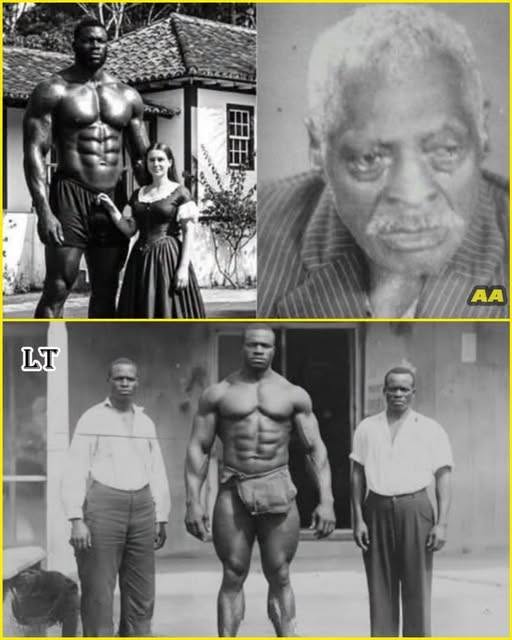
His name was Roque José Florêncio, better remembered as “Pata Seca.”
He was known for his extraordinary height and physical presence.
But the most important part of his story was not his size.
It was his ability to endure a system designed to take away his humanity — and the legacy he left behind after surviving it.
A Man Who Stood Out From The Crowd
Roque José Florêncio was born in the early 19th century in São Paulo Province, Brazil.
From a young age, people noticed that he was different.
He grew unusually tall.
By adulthood, he was reportedly around 2 meters in height, making him one of the tallest men many people in his region had ever seen.
In another world, his size might have brought admiration.
He could have been celebrated for his strength.
He could have been recognized for his individuality.
But he was born into a society where enslaved people were often judged not by who they were, but by what others believed they could provide.
His body became something others wanted to control.
His humanity was ignored.

The Cruel Reality Of Slavery
During this period, slavery in Brazil was deeply connected to the country’s economy.
Large plantations depended on forced labor.
Enslaved people worked under harsh conditions, with their lives controlled by those who claimed ownership over them.
Families were often separated.
Personal choices were denied.
Dreams and ambitions were restricted.
People were reduced to their economic value instead of being recognized as individuals with emotions, talents, and hopes.
Roque’s story reflects one of the darkest aspects of this system:
The way enslaved people were denied control over their own lives and bodies.
More Than A Physical Description
Historical accounts often focus on Roque’s remarkable height.
But behind the measurements was a real person.
A man who had thoughts.
A man who had fears.
A man who experienced the pain of living in a society that refused to recognize his freedom.
It is easy for history to turn individuals into symbols.
But every person who lived through slavery had a personal story.
They had relationships.
They had memories.
They had a desire to be treated with dignity.
Roque was not simply “the tall man.”
He was a human being who survived an inhumane system.
The Meaning Behind The Name Pata Seca
The nickname “Pata Seca” became connected to Roque’s physical appearance.
Like many historical nicknames given during that era, it reflected how people viewed him from the outside.
But the name does not tell the full story.
A person’s identity is never defined only by what others notice first.
Not their appearance.
Not their occupation.
Not the circumstances they were born into.
The true measure of a person is found in their experiences, their resilience, and the impact they leave behind.
A Life Marked By Struggle And Survival
Roque lived during a time when enslaved people had very few opportunities to control their own futures.
Yet stories passed down through generations describe him as someone who became an important figure within his community.
Like many enslaved individuals, he created connections that survived beyond the conditions imposed upon him.
His descendants became part of a larger family history that continues today.
For many families connected to Roque, his story represents survival.
Not because his life was easy.
But because he endured circumstances that were designed to break people.
The Legacy Of The Descendants
One of the most remarkable parts of Roque’s story is the number of descendants connected to him.
Family histories surrounding Pata Seca describe a large lineage that continues through generations.
For descendants, his story is not simply about the past.
It is about remembering an ancestor who lived through one of Brazil’s most difficult periods.
His life represents the strength of people who survived slavery and built families despite enormous obstacles.
Every generation that followed became evidence that oppression did not erase their existence.
Remembering The Person, Not The System
When discussing historical figures connected to slavery, it is important to remember the individual beyond the circumstances surrounding them.
Roque José Florêncio was born into a system that denied him freedom.
He lived during a period when many people were treated unfairly because of their race and social status.
But his story is not only about suffering.
It is also about endurance.
It is about the ability of human beings to maintain identity and hope even under extreme conditions.
Why Stories Like His Still Matter
History is not only made by presidents, generals, and famous leaders.
It is also shaped by ordinary people whose lives reveal the realities of their time.
Stories like Roque’s remind us that behind every historical event are real people.
People who experienced joy and sadness.
People who loved their families.
People who wanted freedom.
People who deserved dignity.
Remembering these stories helps future generations understand the importance of human rights and equality.
The Giant Who Could Not Be Reduced To A Number
Those who lived in Roque’s era may have tried to define him by his body.
By his height.
By what they believed he represented.
But history remembers something different.
It remembers a man who survived.
A man whose descendants carried his name forward.
A man whose story exposes the cruelty of slavery while also revealing the strength of the human spirit.
Roque José Florêncio was more than a remarkable physical figure.
He was a person.
And that is the most important truth history can preserve.